After “Oh my Godding” for the gazillionth time, I paced my living room. The words I yearned to commit in writing were playing hide and seek in an alphabet jungle. What could I possibly have to say to a room of six hundred people? Me? Speaking at the United Nations?
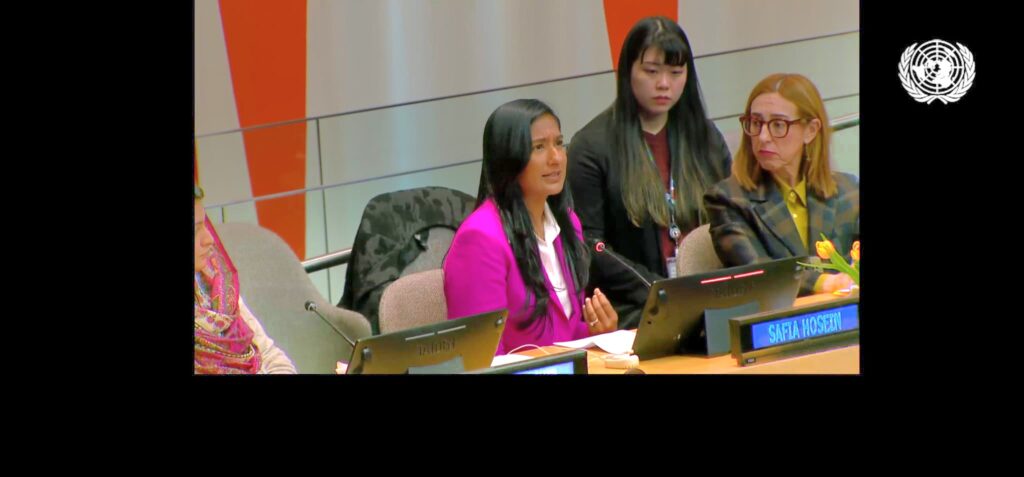
I still love the way a good pen feels as it glides on paper, watching letters form into words that create sentences then paragraphs. I wrote, tore the page out, scribbled, rearranged, crossed out and when I was satisfied wrote it all again. This process on my computer would have been less time consuming but indeed more robotic. I like the messiness of the process. Then I was ready to read the speech out loud with my camera turned on to see how long it would take as I was on a panel with five esteemed women and we all had time limits. “Closing the gender gap in education: How to address long term barriers and emerging challenges in a world of complex crises” – High level event hosted by the President of the General Assembly and UN Women. ECOSOC Chamber- United Nations Headquarters.
Did I think I could address emerging challenges for anything? But I have jumped, pushed, broken and sawed through my own proverbial barriers. I know in unfortunate, intense detail the ones faced in the aviation industry. Not only by women, but this time, it was my lived experience I decided to share.
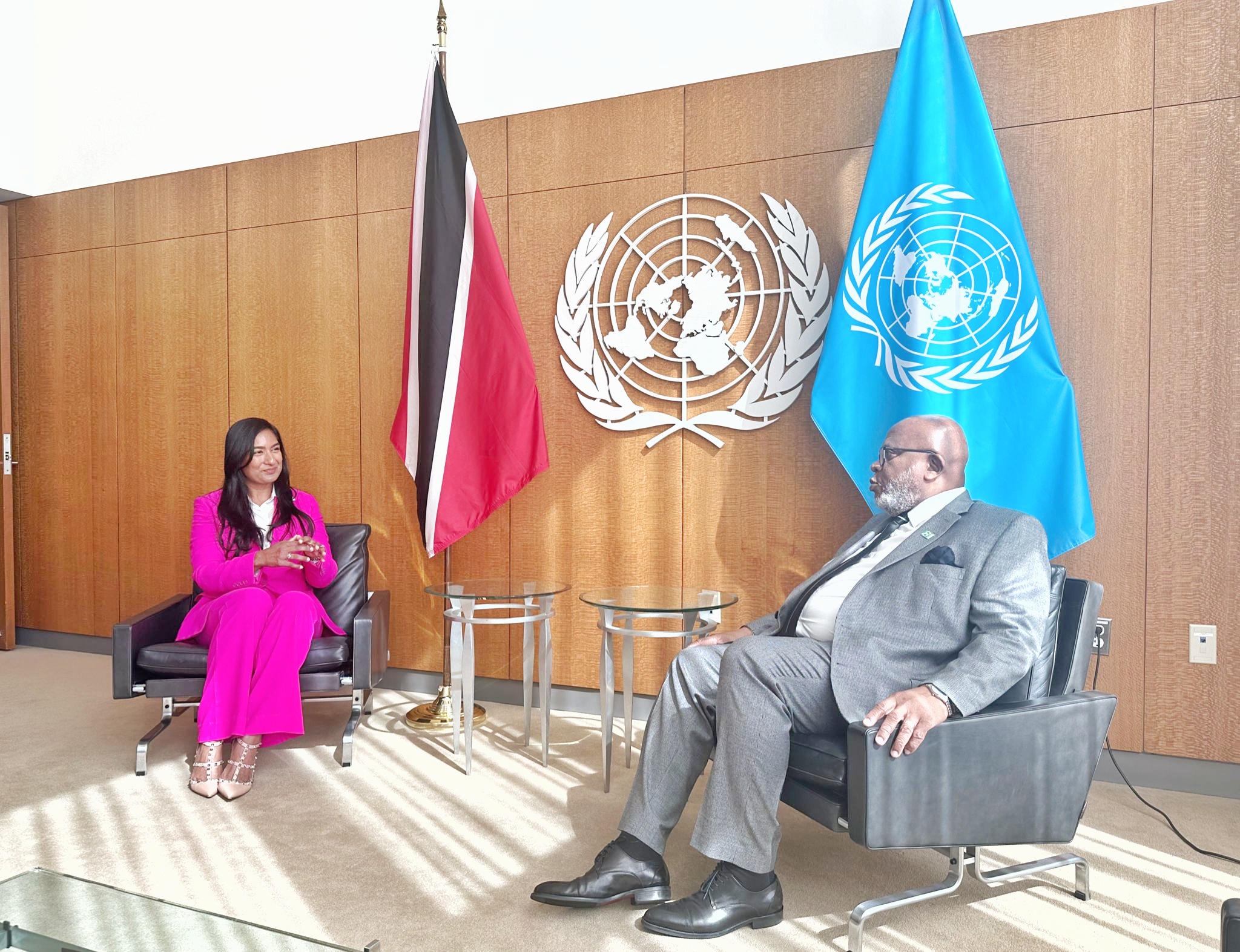
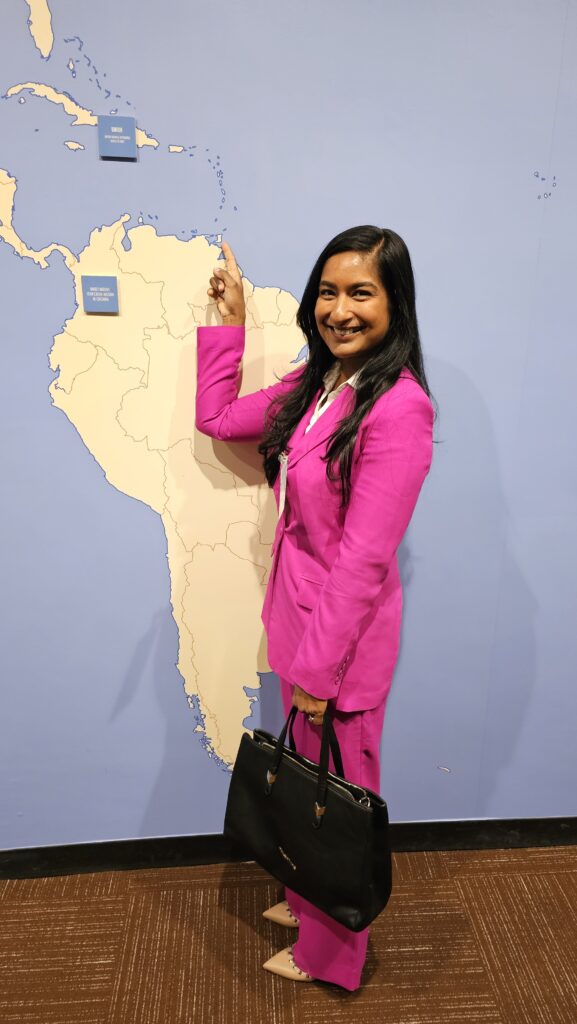
I was lucky enough not only to have my husband, a retired soldier who served for the United Nations in Lebanon, but also my mum, accompany me to New York where the UN Headquarters is based. We all walked past the line of nations flags led by our escort where I searched for the red white and black. We even sauntered past the actual General Assembly Hall. It’s the room you’ve probably seen on television where representatives of all one hundred and ninety three nations sit. We were then ushered into a room to wait for the man who had extended the invitation – His Excellency Dennis Francis, the President of the United Nations General Assembly. I was going to have a private audience with him and my family got to join in as well.
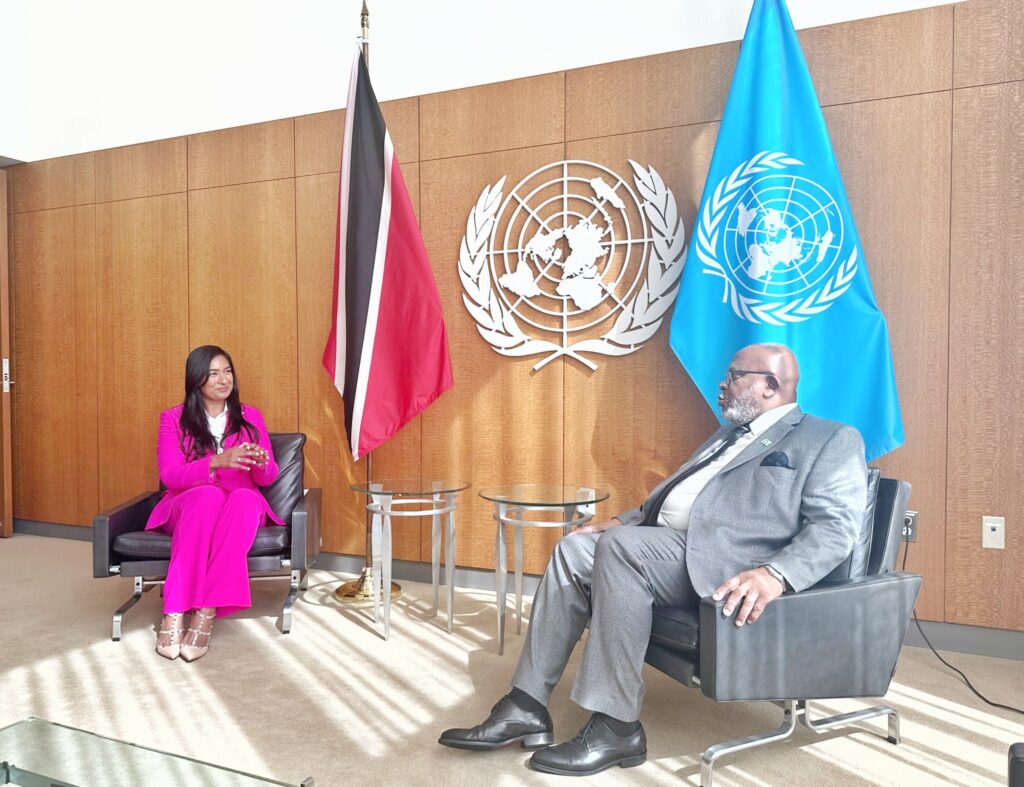
Looking more like the Pink Panther than helicopter pilot, in my flaming pink suit, I shook hands with him, the flag of our shared country in the background. I expressed my gratitude for the invitation. He was lovely to all of us, a rare gentleman in the true sense of the word. I’m sure if I met him on Maracas beach he would have offered the same smile and rapport. After the meeting with a few twists and turns in the enormous building we were ushered into the ECOSOC Chamber. Here, the enormity of the room launched butterflies off a trampoline into somersaults in my tummy. I searched the room and found Devita, a bright spark from Trinidad who was seconded to the United Nations. She had been in contact with me throughout the process of obtaining the official invite and exuded competence. We were both born not too far away from each other. Country girls making our way in the world.
Soon all the speakers were asked to make their way to the stage. Ms. Ana Pelaez Narvaez, Chair, Committee on the Elimination of Discrimination against women. Ms Pelaez from Spain, was born blind and holds degrees in Science of Education and Psychology and completed a Master’s Degree in Special Needs. Ms. Maria Begona Lasagabaster, Director of the Devision for Gender Equality UNESCO. Since December 2018, Ms Lasagabaster had been serving as Representative for UN-Women in Tunisia and Libya. She holds a master’s degree in European law. Ambassador Adela Raz, Director of Afghanistan Policy Lab, Princeton School of Public and International Affairs. Ambassador Adela Raz served as the last Ambassador of the Islamic Republic of Afghanistan to the United States. Prior to that Amb. Raz served as the first female Ambassador and Permanent Representative of Afghanistan to the United Nations. Captain Safia Hosein (Me :):). Has flown as an Aircraft Commander in eleven countries and currently works as a Maintenance Test Pilot Instructor and Examiner in the Middle East. She also has the distinction of being the first female Captain to work for the Joint Aviation Command flying VVIP’s, Heads of State and foreign dignitaries in the United Arab Emirates. She recently became the first citizen of Trinidad and Tobago to summit the highest peak on the continent of Antarctica and believes that reading just like mountaineering offer opportunities for exploration and discovery. Ms. Hadiqa Bashir, Executive Director, Girls United for Human Rights. She is a confident 18-year-old feminist and visionary. Born into a patriarchal society in Swat Valley, Saidu Sharif in the KPK province of Pakistan’s Tribal Belt, which motivated her to work against Early & Forced marriages in Pakistan’s tribal regions.
I was beaming at sharing the same stage with these esteemed women but also wondering if what I had to say would resonate with anyone. In a quiet moment, I decided if my story could help just one person, it would be worth it. We were all chosen to show the people in the audience and ones watching on live broadcast that although born thousands of miles away from each other, we all offered the same message.
Had I believed my husband when he looked up the ECOSOC Chamber and showed me the size of it, I may have noticed where the delegates sat at a podium. This would have saved me a lot of time as I had memorized my speech. But as I sat there listening to the first speakers, I slid my hand into my purse and collected the flashcards I used to memorize. I stared at my hasty ‘crapoud foot’ handwriting and waited my turn. A lot calmer than before as it was now guaranteed I would not forget what was written.
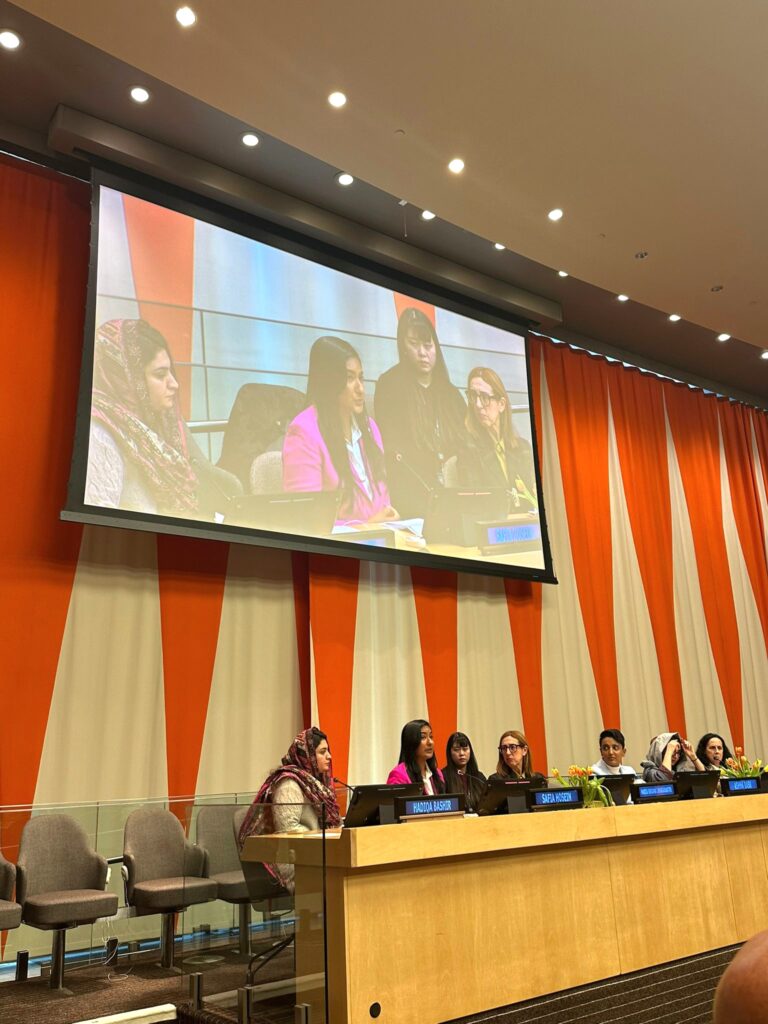
After my introduction from the moderator, a brilliant young doctor from Australia I began,
“Thank you so much. I grew up in a rural bucolic village in Trinidad. I had monkeys in the backyard and Toucans in the front. Although this village was remote, it was actually quite famous. We had fertile soil and towering trees which made it the perfect area to cultivate marijuana.”
Did I say the word marijuana in the first few seconds of addressing a room packed full of people at the UN Headquarters? Yes, yes I did.
Because of that plant I became a helicopter pilot. No, not because my parents planted it- but because when the Government sent helicopters to search and destroy it, they would fly over my house. The seed had been planted. No, not the marijuana seed, the helicopter pilot seed.
I acquired my student pilots license at the age of seventeen, before my drivers license and started flying when I was eighteen years old. I get a lot of drive from my maternal grandmother. I used to complain to her about how boring school was. She in turn would lament the fact that she was married against her wishes at the age of sixteen, never finishing school. She then spent most of her life, working in the sugar cane plantations.
Before I stepped foot in the working world I was exposed to the line that divides men and women. I interviewed for my first job and would have been their first female pilot. However there was a discussion: ‘what they would do when I had my period. How would they handle my mood swings’
There were noticeable murmurings in the room. Encouraged, I continued.
Again, before I even stepped foot onto the flight deck I had ground school classroom sessions. The instructor opened his laptop and projected his screen for the class to see. I was the only woman in the classroom and watched as an image of a naked woman was displayed for all to see. Her private parts covered by files and documents. The instructor stood at the front of the class laughing.
Gasps rippled from the back of the chamber like a chant at a football game to where I sat.
Further down my career, one pilot stood up in a meeting with all my colleagues and said “We should not hire people like them anymore.” I was one of two brown persons in the room.
However, the most terrifying experience occurred when I reported a senior instructor for abuse of authority and bullying. The next day he punched my locker at work. It had my name on it and was made of wood, so so it shattered. He did this in font of witnesses because he KNEW nothing would happen to him. That is the thread that links all these incidents together. There are never any repercussions.
A lot of noise now from the audience.
As a brown woman in aviation, I have been subject to many different forms of discrimination. It never stops.
How I dealt with this as a new pilot and how I deal with it now are very different. Before, I was scared and intimidated. I used to think ‘I’m lucky to have this job, don’t cause any trouble.’ Now I confront it head on and if it becomes antagonistic I take it up the chain of command. If that does not work I will consult a lawyer. Because now I know, I’m not just lucky to have a job, I deserve the job.
I know it sounds like I’ve never had a good day at work. But there were men, few and far between that viewed me not as a ‘female pilot’ but as a ‘pilot’, doing the same job they were- who encouraged me.
*
When the speeches were over I was quickly surrounded by members of the audience. A range of ages, both men and women thanked me for saying the hard parts out loud. They too had suffered, mostly in silence. The ‘one person’ I wanted to make an impact on turned out to be many.
A few weeks later I was invited to be the moderator at the International Search and Rescue conference in Abu Dhabi for another team of esteemed women. During one of the presentations, someone said,
“If you can see it, you can be it.”
I use that quote now but have added “You don’t have to be special to do it.” Because too often we think that a person who has fulfilled their ambitions or goals were born special, or have extra powers we don’t possess.
*
I have worked in aviation and experienced various forms of discrimination. But I have also witnessed men being pummeled by the same. I am a minority in this industry and the men who took time to guide me along the way, I would like to thank.
My flight school instructors, all of you were incredible. The FAA examiner who wrote in my logbook after my FAA Commercial Helicopter check ride “Good Job.”The first owner of Helicopter Adventures. The Managing Director at my first job in Trinidad who recommend me for early upgrade. All the pilots I flew with, who encouraged me and taught me as a young naive pilot instead of demeaning me. The Government of the UAE who gave me chance and the late Captain Charles Alexander.